A remote volcano in southeastern Iran has risen by about 3.5 inches (9 centimeters) in just 10 months — a small shift on paper, but a potentially significant one in geological terms.
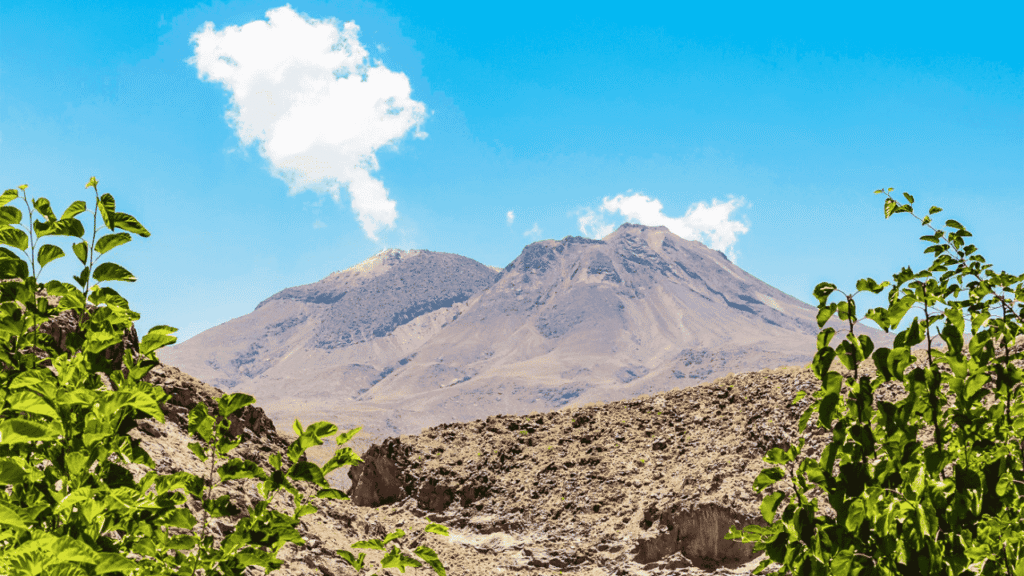
The volcano, known as Mount Taftan, has not erupted in recorded human history. However, new satellite data suggests that pressure is building beneath its summit, prompting scientists to call for closer monitoring of the region.
Table of Contents
Detecting Subtle Ground Movement from Space
The discovery was made using InSAR (Interferometric Synthetic Aperture Radar), a satellite-based technique capable of detecting tiny ground movements from orbit. Researchers relied on data from the European Space Agency’s Sentinel-1 satellites, which operate day and night and can see through clouds.
Over slightly more than ten months, the summit area of Taftan gradually lifted. Importantly, the ground has not returned to its previous level, suggesting that pressure underground has not yet dissipated.
The study was led by Pablo J. González of Spain’s Institute of Natural Products and Agrobiology (IPNA). Because Taftan is remote and lacks permanent monitoring systems like continuous GPS receivers, satellite radar currently provides the most reliable way to track its activity.
Where Is the Pressure Coming From?
Researchers modeled the source of the uplift at a relatively shallow depth — between 1,600 and 2,070 feet (490 to 630 meters) below the surface. This indicates that the deformation is likely linked to gases circulating within a hydrothermal system, rather than fresh magma rising from deep underground.
Taftan’s main magma reservoir lies more than two miles (3.2 kilometers) beneath the surface. That makes it unlikely that molten rock is currently pushing upward. Instead, scientists believe gases accumulating above the magma chamber are building pressure within cracks and porous rock.
The uplift followed a gradual pattern: first rising steadily, then slowing as fractures likely opened and allowed some gas to escape. Heavy rainfall and nearby earthquakes were ruled out as causes, reinforcing the idea that the activity is internal.
Why “Extinct” Can Be Misleading
Mount Taftan stands nearly 12,927 feet (3,940 meters) tall and is classified as a stratovolcano — a steep, layered volcano formed from alternating lava flows and ash deposits. Although it has no documented eruptions in the last 10,000 years, it still emits gases from fumaroles near its summit.
That ongoing gas release signals that the system remains active at depth. The absence of recorded eruptions does not mean a volcano is permanently dormant. Many volcanoes around the world experience long quiet periods before reactivating.
Scientists emphasize that measurements matter more than labels. The newly detected deformation is a measurable physical change — evidence that the volcano is not entirely inactive.
Potential Hazards
At this stage, there is no indication that a lava eruption is imminent. However, the main near-term risk could come from phreatic explosions — steam-driven blasts that occur when underground water rapidly turns to vapor due to heat.
Such explosions can happen with little warning and do not require fresh magma to reach the surface. They may eject ash, rocks, and gas, posing localized hazards.
Gas emissions themselves can also create health concerns. Sulfur-rich fumes can irritate lungs and eyes, especially in communities downwind. The city of Khash, located about 31 miles (50 kilometers) from the volcano, could be affected depending on wind direction.
Importantly, researchers stress that this is not a cause for panic. Rather, it is an early signal that warrants attention.
What Scientists Recommend Next
Researchers are calling for basic monitoring infrastructure to be installed near the volcano. This would include seismometers to detect small earthquakes, GPS stations to measure slow ground movement, and instruments to monitor gas emissions such as sulfur dioxide and carbon dioxide.
Continuous gas measurements could help determine whether pressure is rising or stabilizing. Small seismic changes beneath the summit would also provide clues about how fluids and gases are moving underground.
Even a modest monitoring network would significantly improve early warning capabilities and reduce uncertainty.
A Volcano to Watch, Not Fear
Many volcanoes exhibit small uplifts that never lead to eruptions. Others escalate rapidly after long quiet phases. The key difference lies in monitoring and preparedness.
If Taftan’s uplift slows or reverses, it may signal that pressure is easing. If it continues or accelerates, the risk of steam-driven events could increase. Future gas measurements and seismic data will help clarify the trend.
For now, scientists view Mount Taftan’s subtle rise as a warning whisper — not a shout. Careful observation and early preparation can ensure that, should the volcano awaken more dramatically, nearby communities will not be caught off guard.