Waking up feeling tight or ending the day with aching muscles has become common in today’s sedentary lifestyle. Long hours at a desk, commuting, or spending time on devices can leave the body stiff and low on energy. The encouraging news is that you don’t need high-intensity workouts to feel better. A short, consistent routine of gentle yoga can gradually reduce stiffness and enhance flexibility—without strain or discomfort.
Gentle yoga emphasizes slow, controlled movements paired with mindful breathing. Rather than pushing muscles into extreme stretches, it promotes gradual release, improved circulation, and balanced muscle engagement. Just 10–15 minutes a day can make your body feel more open, mobile, and refreshed.
Table of Contents
Why Gentle Yoga Helps Relieve Stiffness
Although it appears simple, gentle yoga creates meaningful physical changes when practiced regularly. One of its biggest benefits is reducing muscular tension caused by prolonged sitting and repetitive habits. Tightness often accumulates in the neck, shoulders, hips, and lower back—areas these poses directly address.
Another advantage is safe flexibility development. Instead of forcing deeper ranges of motion, gentle yoga encourages tissues to lengthen gradually. This reduces the risk of injury and supports long-term mobility improvements.
Improved blood circulation is another key factor. Slow, steady movements enhance oxygen flow to muscles and joints, helping them function efficiently and recover faster. At the same time, underused stabilizing muscles are gently strengthened, which enhances posture and balance.
Because it is low-impact, gentle yoga is suitable for beginners, older adults, or anyone returning to exercise after time away.
12 Gentle Yoga Poses for Full-Body Relief
Below is a simple overview of each pose, its primary benefit, and suggested duration.
| Pose | Main Benefit | Recommended Time |
|---|---|---|
| Cat–Cow Pose | Improves spinal mobility and reduces back stiffness | 1–2 minutes |
| Child’s Pose | Gently stretches hips and lower back | 1–2 minutes |
| Seated Forward Bend | Lengthens hamstrings and relaxes spine | 30–60 seconds |
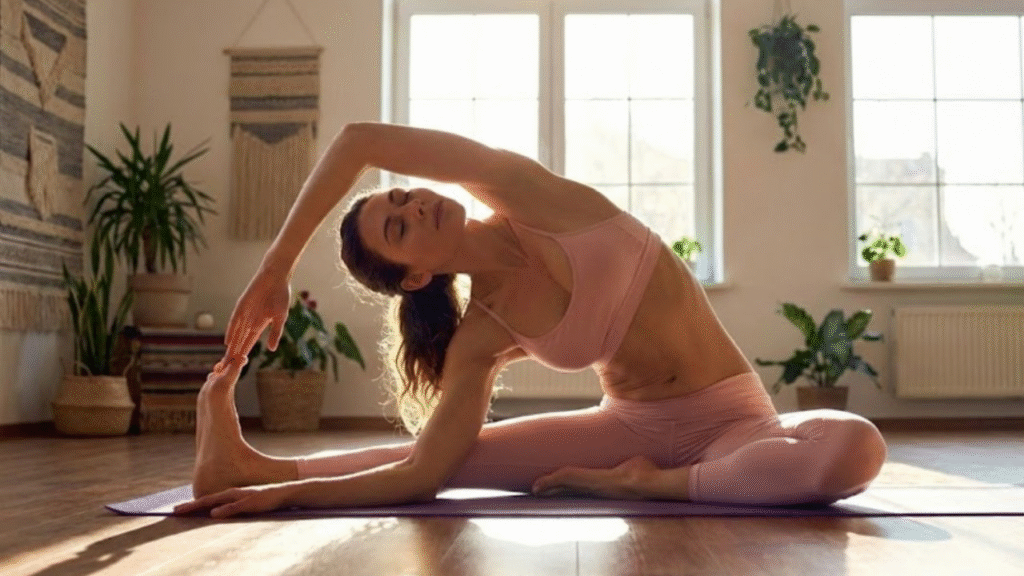
| Standing Side Stretch | Opens side body and improves posture | 30 seconds per side |
| Downward-Facing Dog | Stretches legs and strengthens upper body | 1 minute |
| Butterfly Pose | Enhances hip flexibility | 30–60 seconds |
| Low Lunge | Releases hip flexor tension | 30 seconds per side |
| Cobra Pose | Strengthens lower back and opens chest | 20–30 seconds |
| Supine Twist | Relieves lower back tension | 30 seconds per side |
| Legs Up the Wall | Boosts circulation and reduces leg fatigue | 1–2 minutes |
| Neck Stretch | Eases neck and shoulder tightness | 20–30 seconds per side |
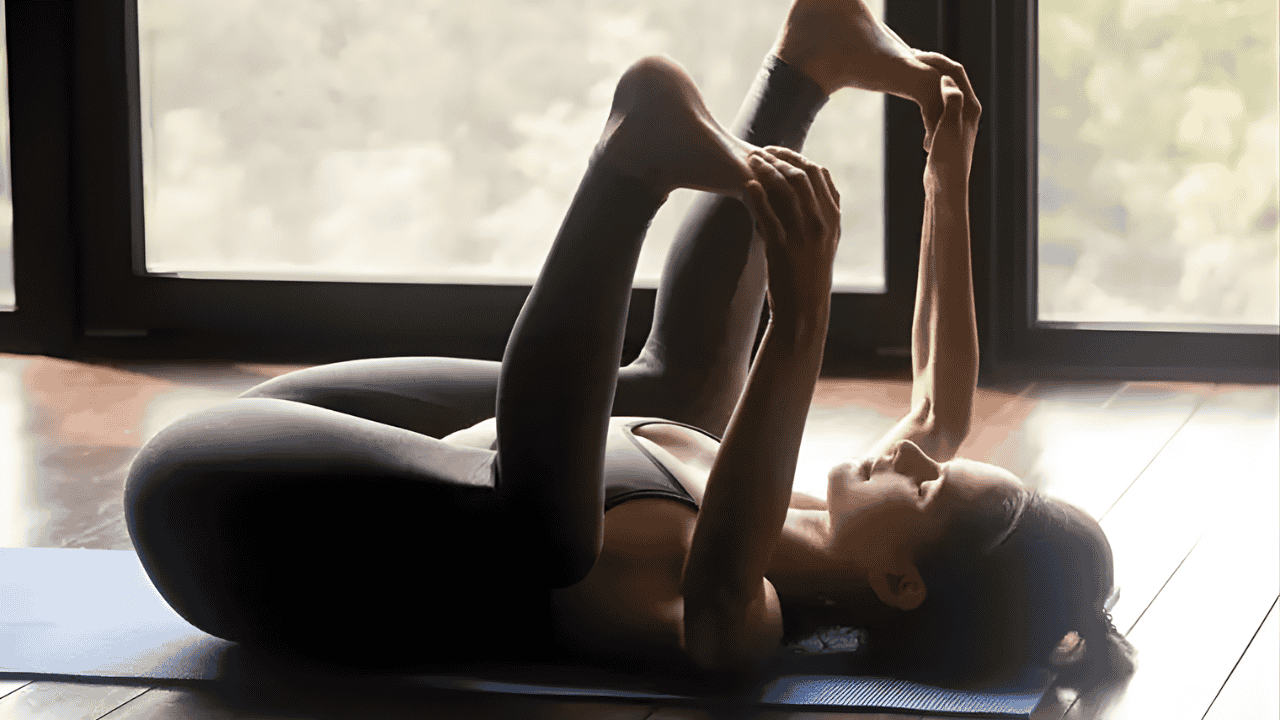
| Happy Baby Pose | Opens hips and relaxes lower back | 1 minute |
Each pose supports the others, creating a balanced full-body routine.
How These Poses Work Together
Spinal mobility movements like Cat–Cow and Supine Twist restore flexibility in the back. Sitting for extended periods often limits natural spinal motion, leading to stiffness. These gentle transitions help reintroduce healthy movement.
Hip-focused poses such as Butterfly, Low Lunge, and Happy Baby release tension in the hip flexors and glutes. Tight hips frequently contribute to lower back discomfort and poor posture. Addressing them improves overall alignment and movement efficiency.
Forward folds like Seated Forward Bend and Downward-Facing Dog stretch the posterior chain—the muscles along the back of the body. These muscles often shorten during long hours of sitting.
Chest-opening poses, including Cobra and Standing Side Stretch, counteract rounded shoulders and shallow breathing. Opening the chest improves posture and allows deeper, more relaxed breaths.
Finally, restorative positions like Child’s Pose and Legs Up the Wall calm the nervous system. They help muscles fully relax and allow the body to absorb the benefits of the session.
Simple Ways to Enhance Your Practice
Consistency is more important than intensity. A short daily session yields better results than occasional long workouts.
Coordinate movement with breath. Inhale while lengthening or opening the body, and exhale as you settle into a stretch. This rhythm supports relaxation and prevents overexertion.
Never force a position. Gentle yoga should create mild, comfortable tension—not sharp pain. Ease into each posture gradually.
Use props when needed. Cushions, folded blankets, or yoga blocks can provide extra support and improve alignment.
After each session, notice how your body feels. Warmth, looseness, and calm energy are positive signs of effective practice.
Changes You May Notice Over Time
With steady practice, many people observe reduced muscle tightness and improved posture within a few weeks. Daily activities like bending, walking, or reaching may feel smoother and more comfortable.
Better sleep is another common benefit. Gentle stretching in the evening can help release accumulated tension and signal the body to relax.
Flexibility increases naturally without aggressive stretching, and balance gradually improves. Minor aches caused by stiffness often decrease.
Perhaps most importantly, gentle yoga fosters greater awareness of your body. You begin to recognize where tension builds and how to release it before discomfort sets in.
Conclusion
Body stiffness is a common part of modern life, but it doesn’t have to be permanent. Incorporating these 12 gentle yoga poses into your routine can gradually improve flexibility, reduce tension, and support better posture and mobility.
By moving mindfully, breathing steadily, and practicing consistently, you give your body the opportunity to reset and restore. Over time, even a brief daily session can lead to lasting comfort, improved movement, and a stronger connection between mind and body.